


1 Million and Counting

Saint Gobain
NASA
Time Warner Cable
Loreal Paris
Siemens
DHL

Why automated network audits are critical for enterprise security and compliance

Enterprise networks change daily; firewall rules are modified, routing policies are adjusted, firmware is upgraded, and access controls are updated. When these changes are not continuously monitored against approved standards, configuration drift spreads across environments, security policies diverge between sites, and compliance gaps remain undetected until an outage or audit exposes them. Automated network audits establish continuous validation of device configurations, enforce defined baselines, and surface unauthorized or risky changes immediately; enabling teams to prevent instability instead of diagnosing it after impact.

How to audit your network with advanced capabilities in Network Configuration Manager?

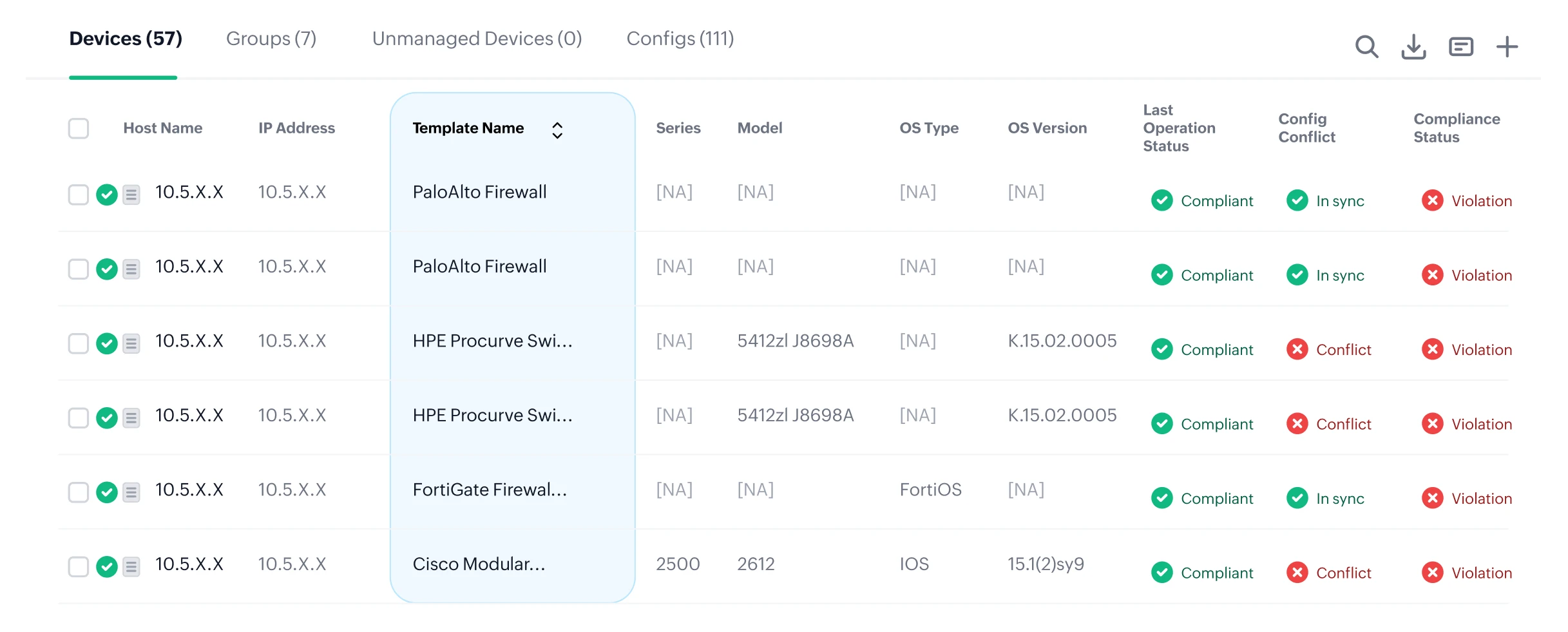
Asset discovery and inventory

  • Centralize real-time device inventory

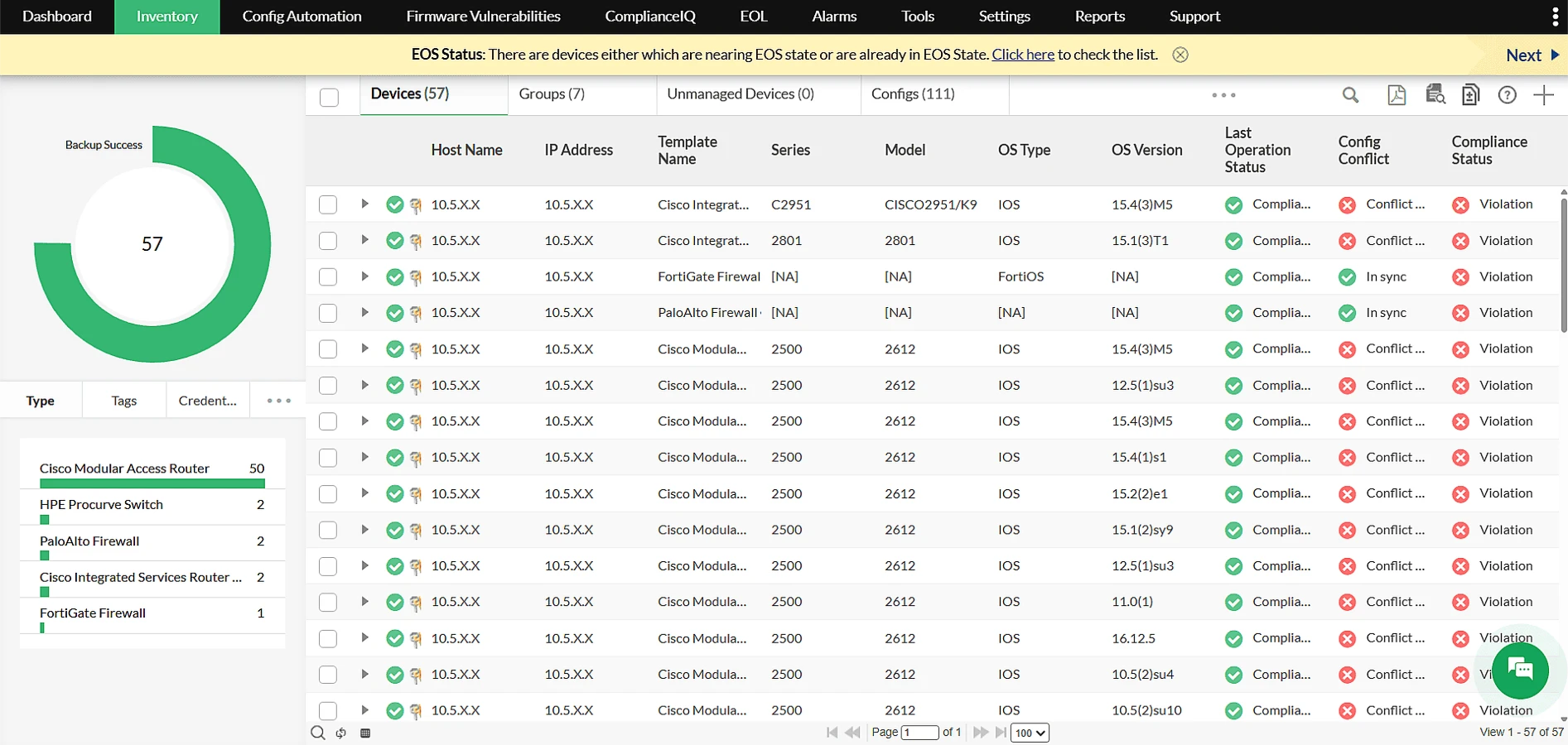
    Auto-discover devices and view complete audit data like IP, firmware, compliance, configuration, and backup status in a single unified platform.

  • Expose risks and unmanaged changes early

    Identify new, unmanaged, or misconfigured devices, along with configuration conflicts and backup failures before they impact operations.

  • Maintain audit-ready infrastructure visibility

    Keep accurate, up-to-date device metadata for audits, lifecycle tracking, and complete infrastructure awareness without fragmented visibility.
Learn more about inventory
Asset discovery and inventory
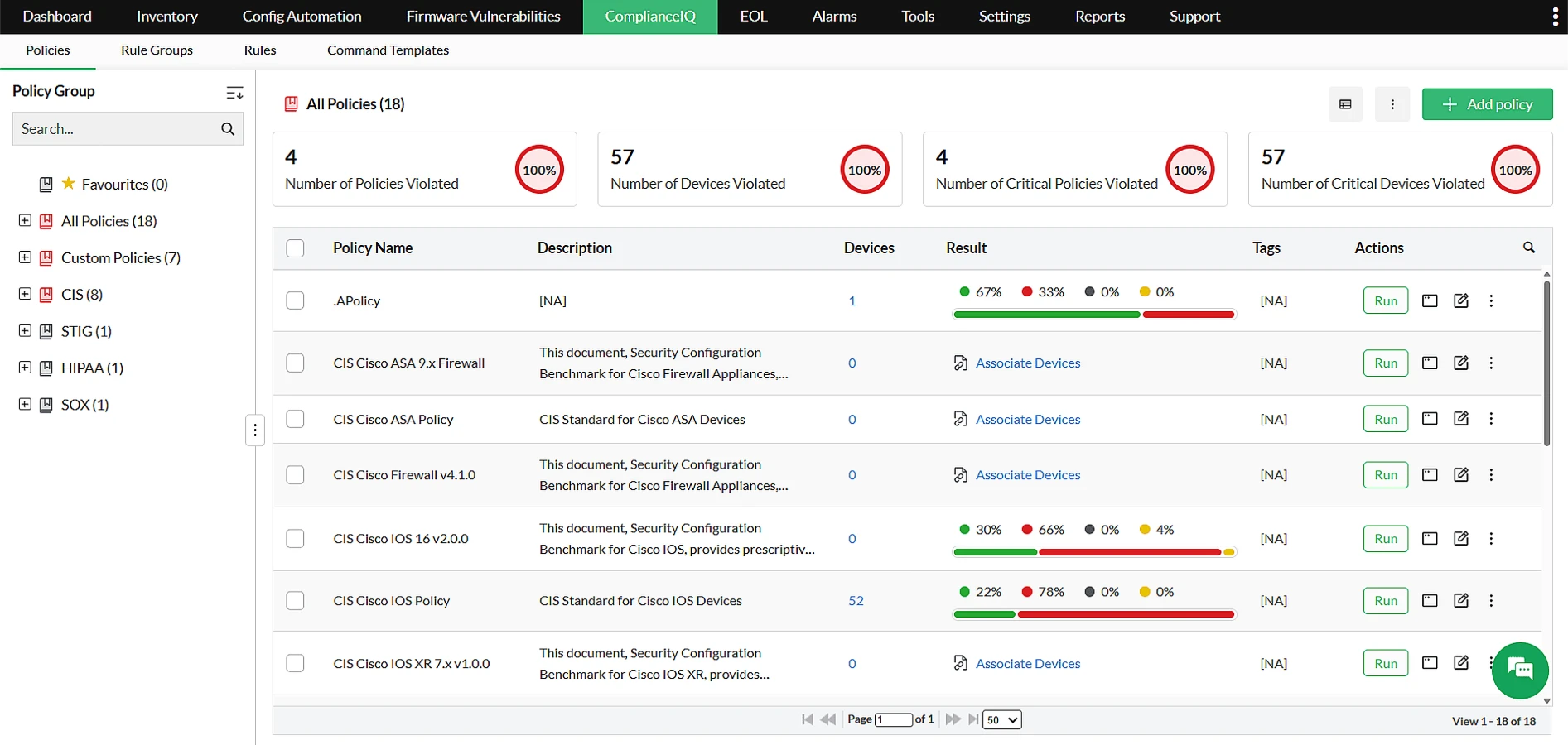
Compliance auditing with Compliance IQ

Compliance auditing with Compliance IQ

  • Continuously validate configuration compliance

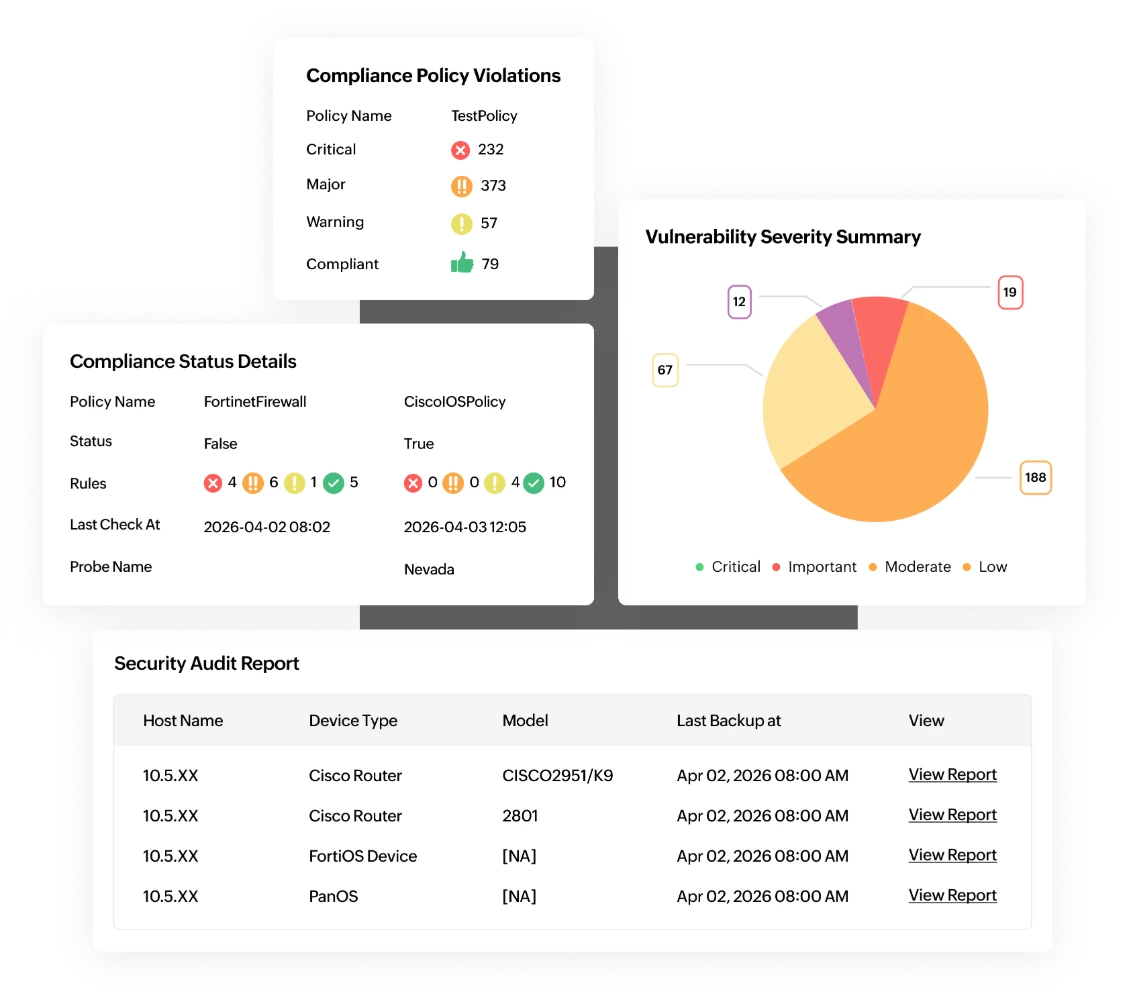
    Run real-time checks against defined standards to identify compliant and non-compliant devices across the network.

  • Gain deep visibility into violations

    Drill down into policy violations with severity levels, access exact rule failure details, and visualise how configurations deviate from approved baselines.

  • Remediate deviations and enforce standards

    Apply programmable configlets to fix violations and ensure configuration standards are consistently enforced across all devices.

Learn to audit compliance

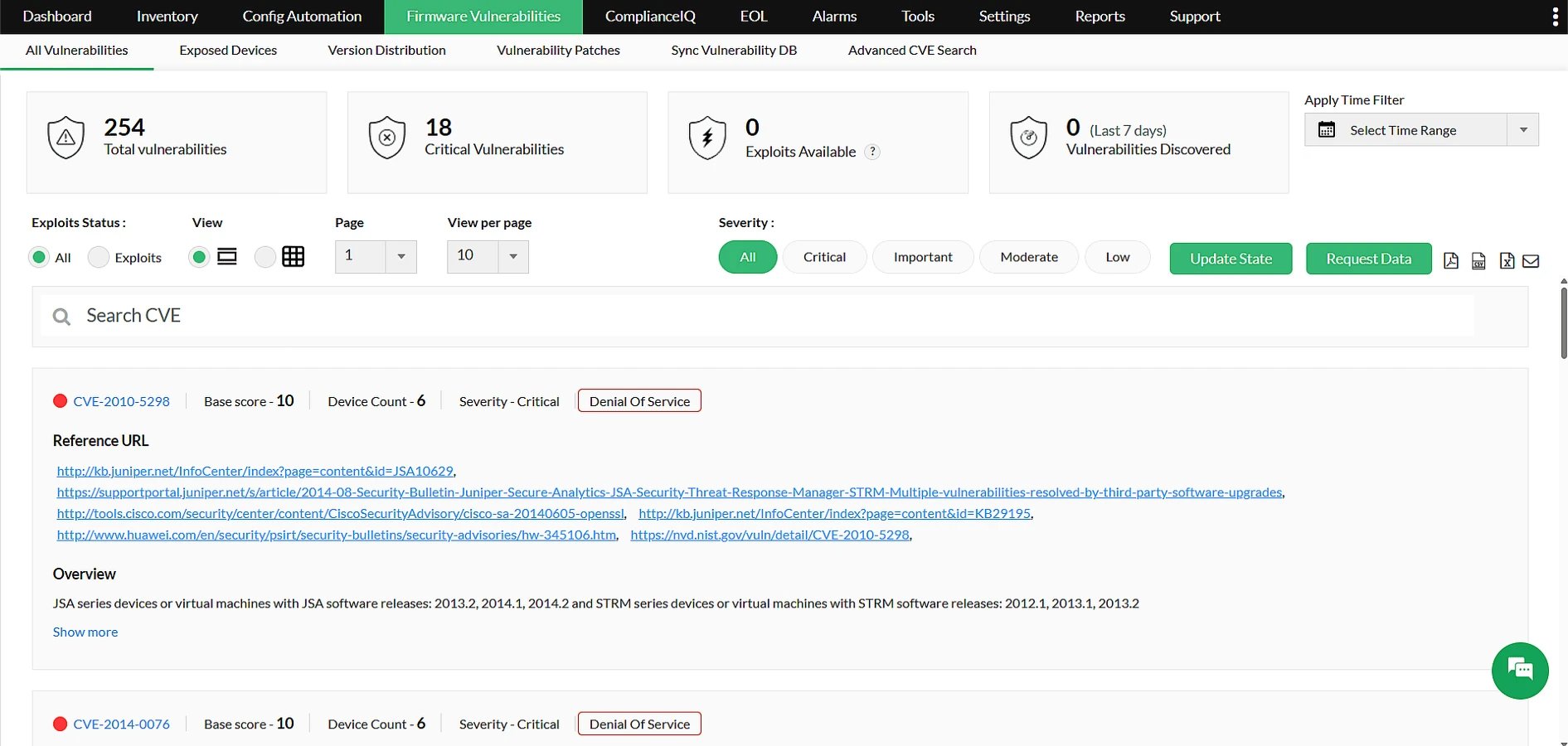
Firmware vulnerability auditing

  • Centralize firmware visibility across the network

    Maintain a unified firmware inventory for all managed devices with complete version tracking.

  • Identify vulnerabilities and assess risk

    Map firmware versions to CVE IDs, base scores, and severity levels to quickly detect and prioritise vulnerable devices.

  • Track lifecycle and drive remediation

    Use firmware tree views, detailed reports, and upgrade paths to manage firmware lifecycle and enable risk-based remediation across the network.

Learn to audit firmware
Firmware vulnerability auditing
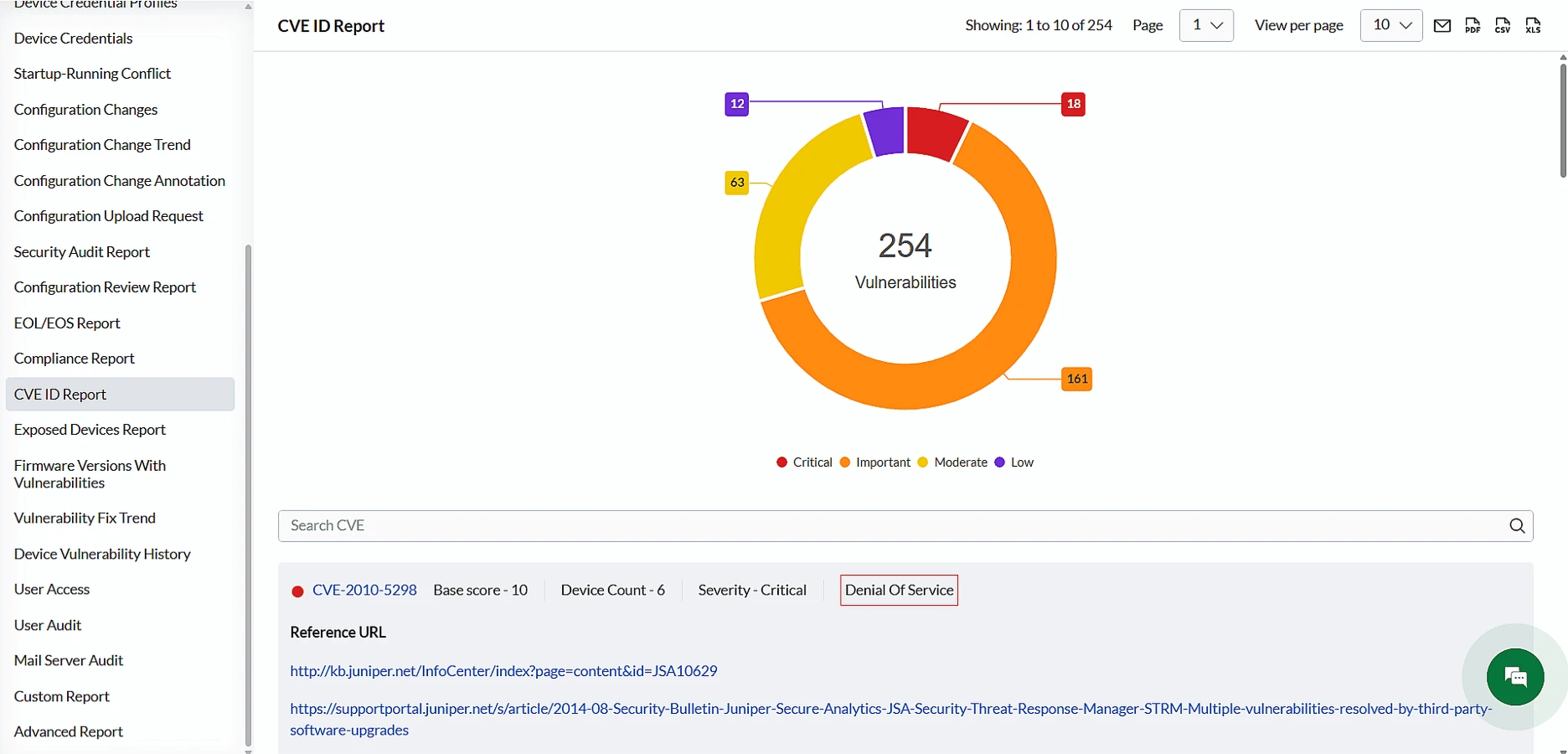
Reporting and analytics

Reporting and analytics

  • Generate comprehensive audit reports

    Access 26+ built-in reports covering compliance, violations, vulnerabilities, configuration changes, and device status.

  • Track changes, accountability, and risk trends

    Monitor configuration changes with user attribution and timestamps, and analyse vulnerability exposure trends over time.

  • Deliver audit-ready evidence

    Export detailed reports for internal reviews and external assessments, providing clear proof of control, accountability, and risk posture.

Discover NCM reports

Why ManageEngine’s Network Configuration Manager is an ideal network audit software?

Comprehensive multi-vendor support

Network audits must cover every device across the infrastructure. Network Configuration Manager supports routers, switches, firewalls, and other devices from leading vendors within a single platform. This ensures consistent configuration tracking, compliance validation, and audit visibility across heterogeneous environments without relying on multiple tools.

Comprehensive multi-vendor support
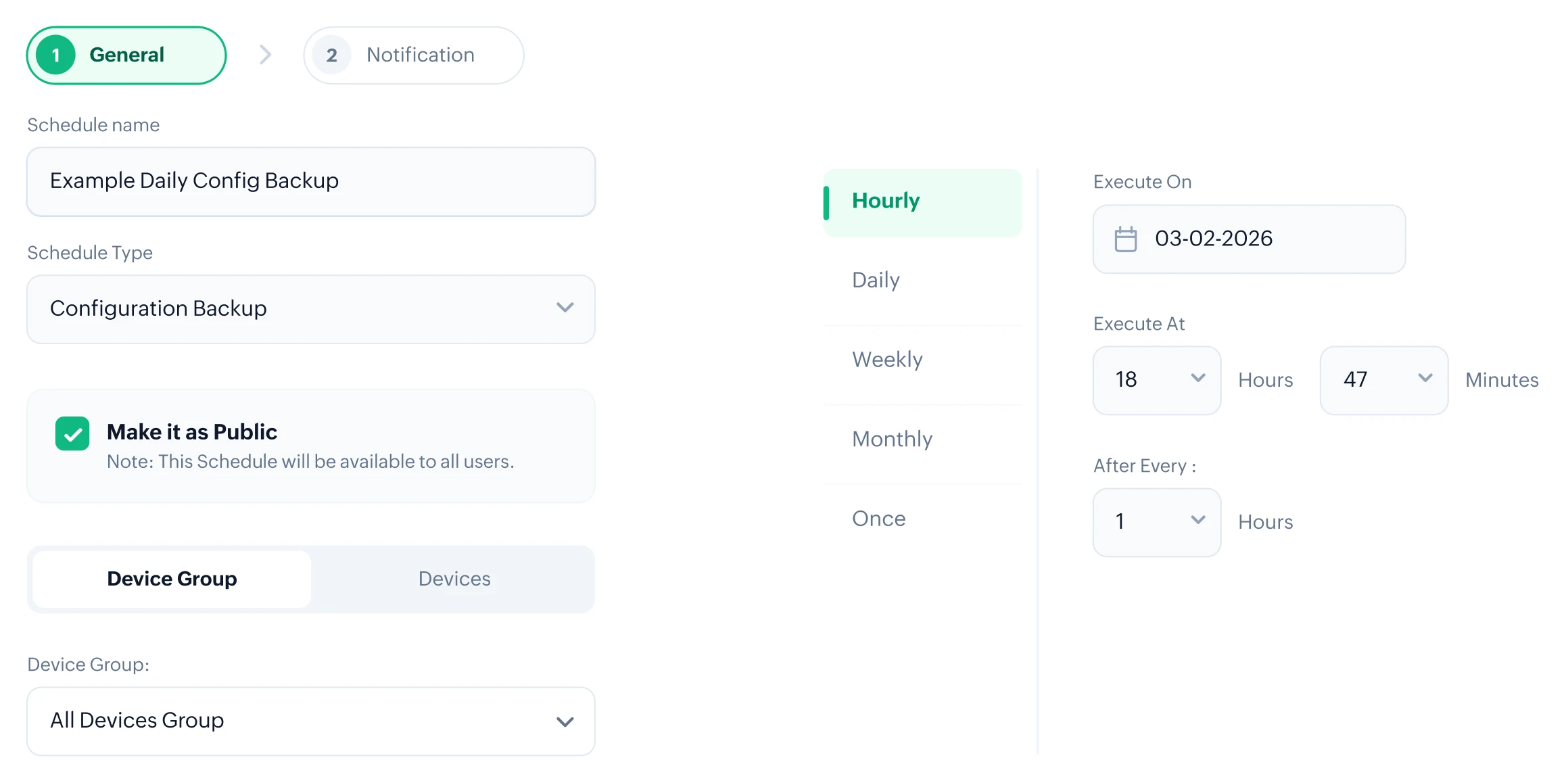
Automated configuration backups for audit traceability

Automated configuration backups for audit traceability

Reliable audits require accurate configuration records. Network Configuration Manager automatically backs up running and startup configurations and maintains complete version history. This provides verifiable historical baselines, simplifies evidence collection, and ensures recovery readiness during audits.

Real-time change monitoring and alerts

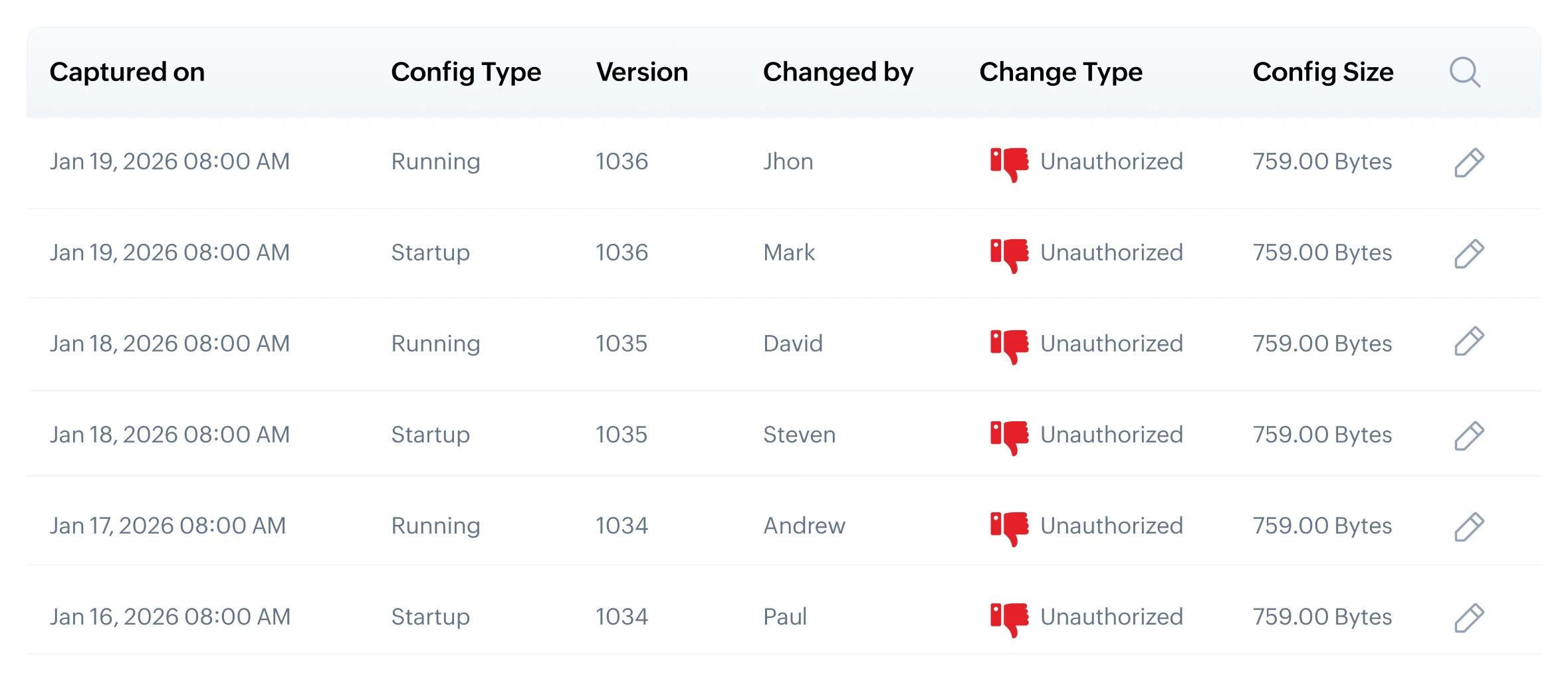
Untracked configuration changes often lead to audit findings. Network Configuration Manager records every change with user attribution and timestamps while generating alerts for unauthorized or high-risk modifications. This creates a clear audit trail and reduces configuration drift.

Real-time change monitoring and alerts
Enhanced access control with role-based access control (RBAC)

Enhanced access control with role-based access control (RBAC)

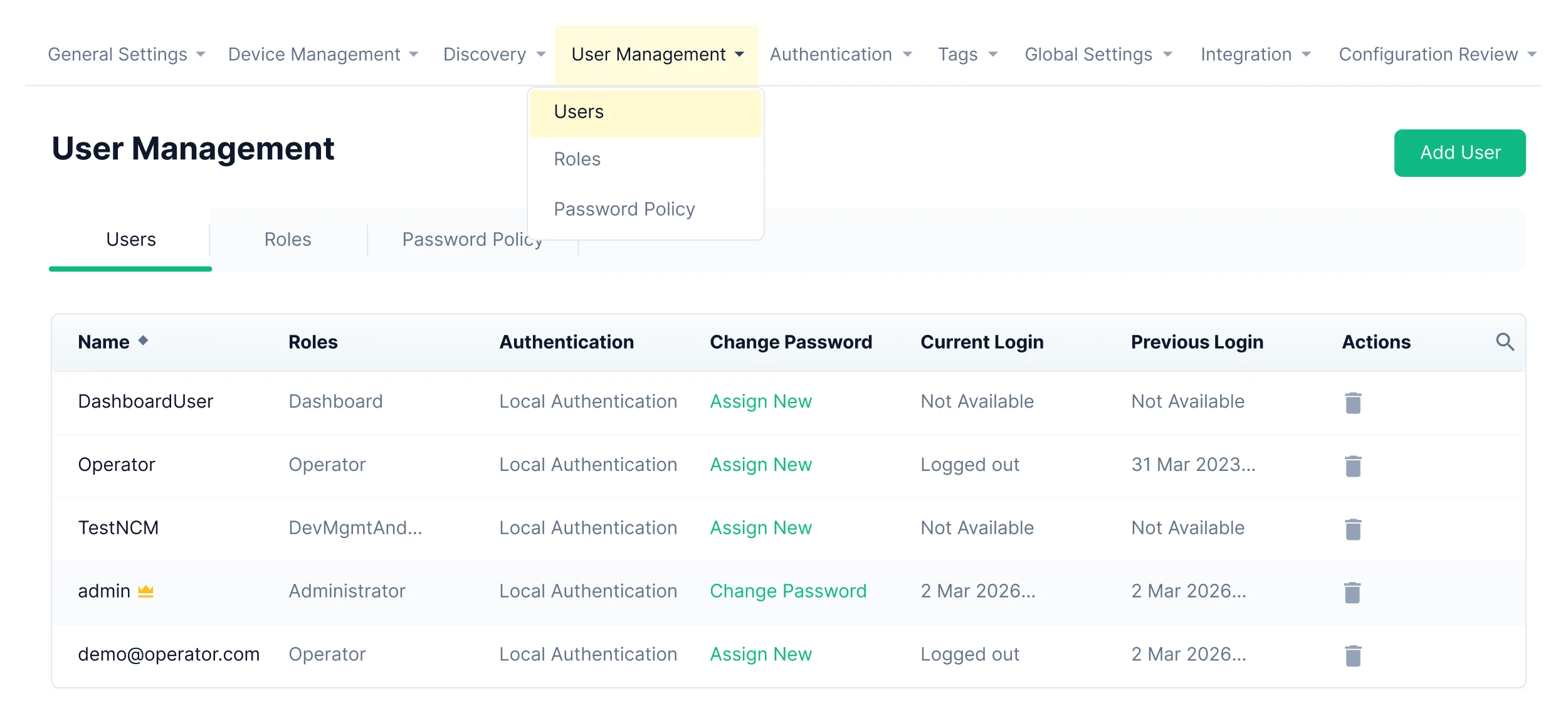
Access governance is a core audit requirement. RBAC enforces least-privilege access to device configurations and maintains detailed activity logs. This helps organizations demonstrate proper control over who can view or modify configurations.

Simplify multi-vendor network audits

Auditing a network that includes devices from multiple vendors can quickly become complex. Network Configuration Manager enables centralised auditing across heterogeneous environments, helping teams maintain visibility and control without juggling multiple tools. Conduct consistent audits across devices such as:

Switch

  • IBM
  • Avaya
  • Cisco
  • DLink
  • Dell
  • Gigamon
  • Motorla
  • and more

Router

  • Hitachi
  • Brocade
  • Huawei
  • Microtik
  • Dax
  • Digi
  • and more

Firewall

  • CheckPoint
  • Citrix
  • F5
  • Fortinet
  • PaloAlto
  • Yamaha
  • and more
Explore the full list of supported devices

Benefits of using Network Configuration Manager
as your network audit tool

Reduce audit preparation time

Network Configuration Manager centralises configuration history, compliance status, vulnerability exposure, and change records in one platform. Instead of collecting data from multiple sources before an audit, administrators can generate ready-to-share reports instantly. This significantly reduces preparation effort and shortens audit cycles.

Strengthen compliance posture

Continuous configuration validation and policy enforcement ensure that compliance gaps are identified early rather than during formal audits. By maintaining defined baselines and tracking deviations in real time, organizations move from reactive remediation to sustained compliance readiness.

Improve operational accountability

Every configuration change is recorded with user attribution and timestamps, creating a clear chain of responsibility. This transparency improves governance, simplifies internal reviews, and reduces disputes during audit investigations.

Minimize risk and downtime

By detecting configuration drift, unauthorized changes, and firmware vulnerabilities early, Network Configuration Manager helps prevent outages and security incidents before they escalate. Proactive audit visibility directly translates into greater network stability.

FAQs on network audit software

What are network audits?


Network audits are structured evaluations of device configurations, access controls, firmware versions, and compliance posture across the network. They help organizations identify configuration drift, policy violations, unauthorized changes, and exposure risks while maintaining documented control over network infrastructure.

Why use network audit software instead of manual auditing?


How does ManageEngine’s Network Configuration Manager support regulatory compliance auditing?


Is there a free version of ManageEngine’s Network Configuration Manager?


What is the best tool for network audit?


Continuously validate configurations and
eliminate audit blind spots